
科研进展
-
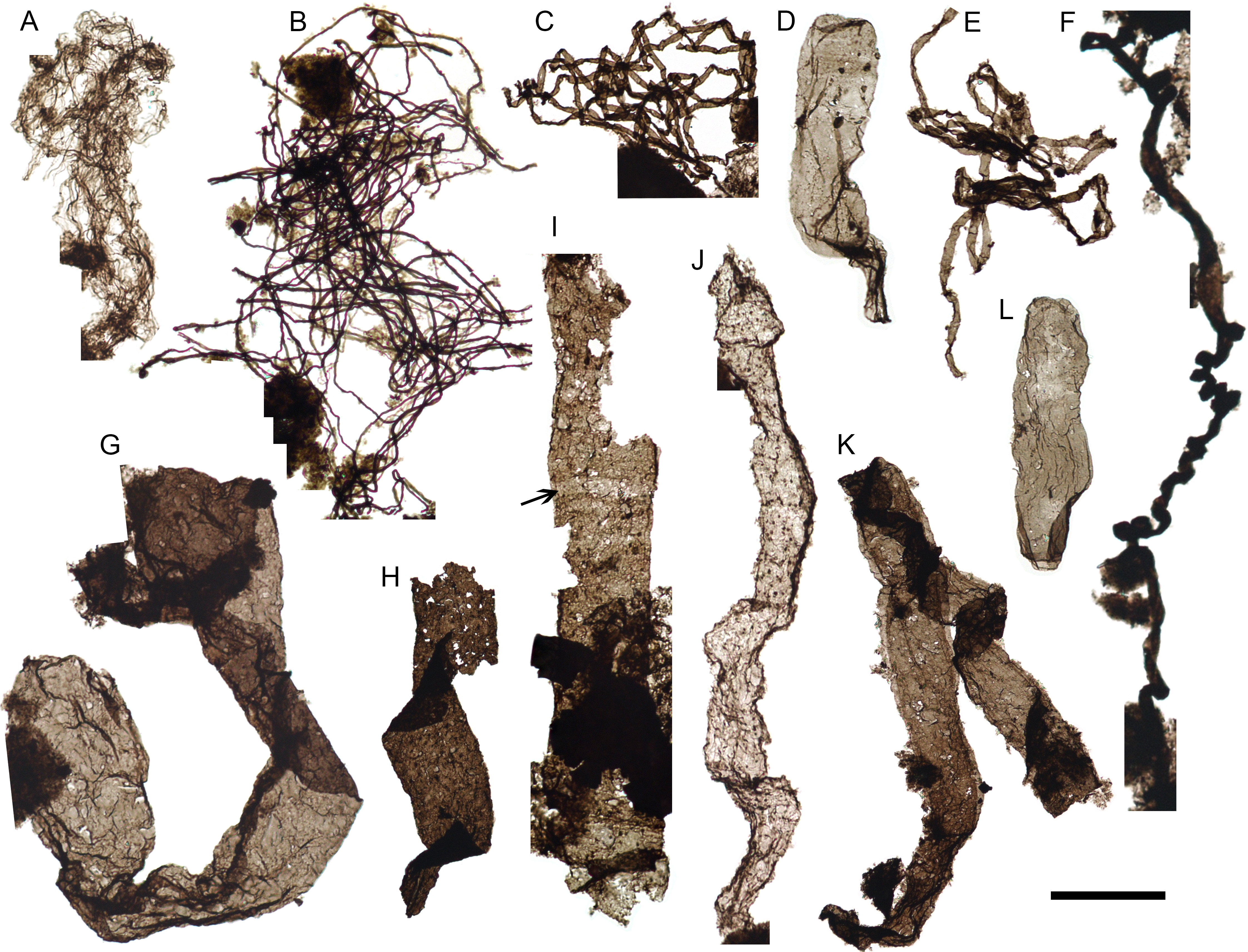 燕山地区首次发现真核生物的最早典型化石Tappania近期南京古生物所研究员朱茂炎课题组在燕山地区首次发现了这一典型的真核生物最早的化石代表。该发现进一步扩展了该化石的古地理分布范围,也为华北板块南、北缘的古-中元古代地层对比提供化石依据。相关成果于近期发表于国际地学期刊《前寒武纪研究》(Precambrian Research)上。真核生物是地球上最为复杂的生命类型,它的起源是地球生命演化史上一次重大演化事件。根据古生物学证据,真核生物起源的时间应不晚于距今16.5亿年(古元古代末期),最古老的化石记录包括我国华北板块北缘的燕山地区长城群下部地层和南缘的汝阳群地层中的具复杂形态的疑源类化石(亲缘关系未知的单细胞化石)。Tappania plana Yin, 1997是其中经典化石代表之一。虽然为单细胞生物,但其形态极为复杂,具有领状延伸和管状突起等特征。Tappania由中国科学院南京地质古生物研究所研究员尹磊明于1997年在华北板块南缘古元古代晚期汝阳群地层中发现并命名,后续在世界多个地方(如印度、澳洲、北美、西伯利亚)相当地层中报道。但奇怪的是,该化石从未在燕山地区发现,即使燕山地区的早期生命研究工作自上世纪六、七十年就已经开始。近期南京古生物所研究员朱茂炎课题组在燕山地区首次发现了这一典型的真核生物最早的化石代表。该发现进一步扩展了该化石的古地理分布范围,也为华北板块南、北缘的古-中元古代地层对比提供化石依据。相关成果于近期发表于国际地学期刊《前寒武纪研究》(Precambrian Research)上。燕山地区的Tappania主要发现于河北省宽城地区古元古代晚期(距今约16.4亿年)串岭沟组上部页岩地层中,沉积于潮下带环境。化石的形态、大小等特征均可与华北板块南缘汝阳群地层中的对比,具有圆形至拉长形的膜壳(直径26–155微米)、远端开口或封闭的领状延伸结构和中空的管状突起结构。其管状突起的长度、粗细、是否分叉、数量和分布位置在不同化石间有些许变化,有时即使在同一个标本上也有差异。这些形态上的差异变化支持了前人的解释,认为Tappania很可能已经具备了复杂的细胞骨架和内膜系统等亚细胞结构,据此可以推测当时的真核生物已经演化出了相应的复杂细胞结构。此外,Tappania应该是一类处于生长期(营养阶段)的生物体,而非繁殖囊胞或休眠囊胞,但目前它的具体亲缘关系仍是未知。与Tappania一同产出的还有多种多样的原核丝状体化石(10属,21种),包括深色微透光的具多种分枝状化石、无分枝管状丝状体和由单列细胞组成的丝状体化石。其中,丝状体组成了该微体化石组合的主体(~90%),整体反应了一个以原核生物为主导的微生物系统。虽然当时真核生物在形态上已经达到一定程度的多样化(和中元古代的相似),但从丰度上来看仍是边缘性生物。本研究得到了国家重点研发计划和国家自然科学基金联合资助。论文相关信息:Miao, L., Yin, Z., Li, G., Zhu, M., 2024. First report of Tappania and associated microfossils from the late Paleoproterozoic Chuanlinggou Formation of the Yanliao Basin, North China. Precambrian Research 400, 107268. https://doi.org/10.1016/j.precamres.2023.107268.燕山地区串岭沟组中的Tappania plana和Tappania共生的多种分枝丝状体化石和Tappania共生的管状化石(比例尺在H中代表100微米,其余的为50微米)和Tappania共生的单列细胞组成的丝状体化石(比例尺在A-B和D中代表20微米,其余的为50微米)052024-01
 -
 欧龙布鲁克地体早奥陶世三叶虫与古地理新认识近期,中国科学院南京地质古生物研究所助理研究员魏鑫与西安地质调查中心研究员周志强合作,对青海石灰沟剖面多泉山组中部(弗洛阶上部)的三叶虫动物群进行了详细的系统古生物学研究。研究共鉴定出三叶虫3属3种(包括新属Zhiyia),其中2种三叶虫(属)也见于华南板块,进而推测早奥陶世欧龙布鲁克地体与华南板块之间密切的古地理联系。相关研究已在线发表在国际古生物学研究期刊《波兰古生物学报》(Acta Palaeontologica Polonica)。祁连构造带位于我国三大主要板块(华北、华南和塔里木板块)之间,是中亚构造带的重要组成部分。欧龙布鲁克地区位于柴达木地体和南祁连山地区之间,是一个孤立的小地体。过去几十年,该地区的奥陶纪化石虽然已经被系统研究(如三叶虫、头足类、笔石类和几丁虫),但关于它的古地理位置是靠近华南板块还是靠近华北板块却依然未能确定。近期,中国科学院南京地质古生物研究所助理研究员魏鑫与西安地质调查中心研究员周志强合作,对青海石灰沟剖面多泉山组中部(弗洛阶上部)的三叶虫动物群进行了详细的系统古生物学研究。研究共鉴定出三叶虫3属3种(包括新属Zhiyia),其中2种三叶虫(属)也见于华南板块,进而推测早奥陶世欧龙布鲁克地体与华南板块之间密切的古地理联系。相关研究已在线发表在国际古生物学研究期刊《波兰古生物学报》(Acta Palaeontologica Polonica)。本次研究报道的多泉山组中部三叶虫共3属3种,即双刺柴达木虫Tsaidamaspis diarmatus Chang and Fan, 1960,青海志毅虫Zhiyia tsinghaiensis (Chang and Fan, 1960)和列夕壳虫不定种Liexiaspis sp. indet.。其中,Zhiyia一属是基于欧龙布鲁克地体和华南板块下奥陶统弗洛阶的材料新建立的栉虫类新属。其特征主要包括:1)头盖和尾部的背沟模糊不显;2)平凹的前边缘和窄(纵向)的颈环;3)双瓣型的唇瓣发育浅凹的后边缘和一个小的三角形中突;4)近半圆形的尾部发育宽的尾轴和边缘。Zhiyia新属还曾报道于湖北宜昌大湾组下部[Zhiyia obscura (Zhou and Zhou, 2019)]和湖南列夕马刀堉组(Zhiyia sp. nov.)。值得一提的是,虽然Tsaidamaspis是欧龙布鲁克地体典型的地方分子,但Zhiyia和Liexiaspis却是华南板块“列夕生物群”中的重要组成部分,这也表明在早奥陶世弗洛期,上述两个地方已经有着密切的生物古地理联系。此次命名的新属Zhiyia的词源为“Zhiyi(志毅)”,是为了缅怀去年年底去世的著名地层古生物学家周志毅先生(1939-2022)。周志毅先生为我国以及国际三叶虫研究事业做出了巨大贡献,他既是笔者的专业老师,也是共同作者(周志强研究员)的挚友。自上世纪70年代以来,周先生共发表文章与专著150余篇(部),为早古生代三叶虫系统分类、生物古地理、古生态、宏演化以及塔里木油气勘探等诸多领域的研究做出了杰出贡献。该研究得到第二次青藏高原综合科学考察研究、中国科学院战略性先导科技专项(B类)、国家自然科学基金项目以及现代古生物学和地层学国家重点实验室的联合资助。论文相关信息:Xin Wei, Zhiqiang Zhou. 2023. Floian, Early Ordovician, trilobites from the Olongbluk Terrane, northwest China. Acta Palaeontologica Polonica, 68. https://doi.org/10.4202/app.01102.2023.欧龙布鲁克地区石灰沟剖面多泉山组中部采样点及三叶虫占比早奥陶世弗洛期古地理图(部分)显示多泉山组三叶虫(属)的分布情况欧龙布鲁克地区石灰沟剖面多泉山组中部(弗洛阶上部)三叶虫新属Zhiyia及其复原图(图示Zhiyia tsinghaiensis (Chang and Fan, 1960))292023-12
 -
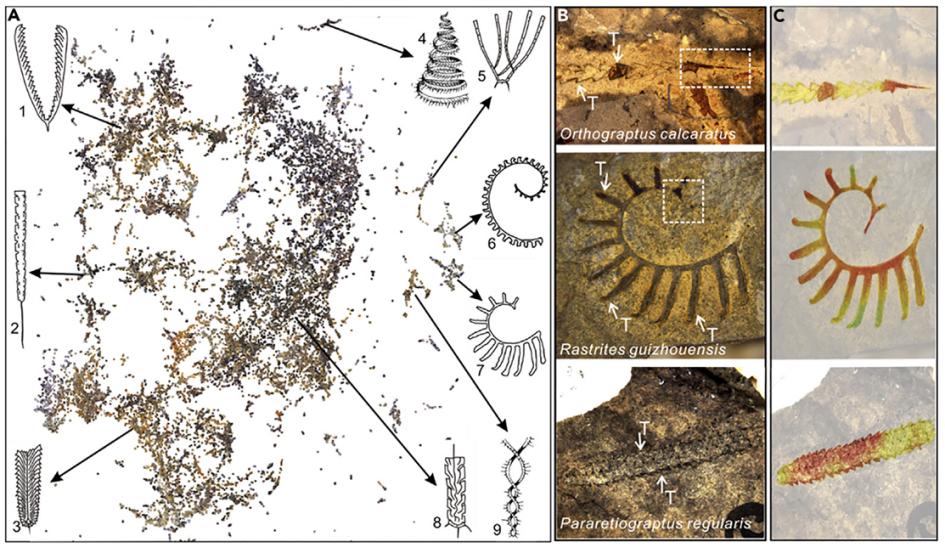 笔石化石智能识别研究取得进展近期,中国科学院南京地质古生物研究所地层古生物大数据中心研究员徐洪河,联合天津大学副教授牛志彬等,基于笔石化石多模态数据集以及全新的深度学习残差网络算法,在笔石化石智能识别领域取得系列进展。相关成果在《细胞》(Cell)出版集团旗下开放获取的综合性期刊iScience上发表,其算法与软件系统获得一项美国发明专利。笔石化石的研究对于认识生物宏演化、开展地层对比以及页岩气勘查均具有重要意义。笔石化石的地质时代延限短,对于判断地层的地质时代具有不可替代的作用。另外,笔石所赋存的页岩,也是清洁能源页岩气的重要产出层位。目前,古生物学者们已经通过详细的笔石化石和生物地层学、油气勘查等领域的综合研究,将不同的笔石物种与页岩气的赋存层位之间建立了关联,并将这种关联关系应用到了我国页岩气的勘探开发之中。然而,笔石化石往往个体较小,不同物种之间形态上差别微小,对笔石化石的鉴定一直是古生物学领域的重点和难点工作之一。如何准确、快速鉴定笔石化石对于地质学家甚至古生物学家都是一项挑战。近期,中国科学院南京地质古生物研究所地层古生物大数据中心研究员徐洪河,联合天津大学副教授牛志彬等,基于笔石化石多模态数据集以及全新的深度学习残差网络算法,在笔石化石智能识别领域取得系列进展。相关成果在《细胞》(Cell)出版集团旗下开放获取的综合性期刊iScience上发表,其算法与软件系统获得一项美国发明专利。团队花费两年多时间,创建了笔石化石标本综合数据集。该数据集涵盖了华南奥陶系-志留系地层中的113个笔石种或亚种的科学信息,并包含超过34000幅化石标本图像。科研人员通过对这些笔石化石标本图像开展精细化的标注,并利用残差网络训练人工智能深度学习模型,所获得的模型对于笔石属、种的自动识别准确率可达86%和81%。团队对模型所开展的基于古生物学系统分类信息而建立的层级约束训练算法,以及由此开发的软件系统获得了美国发明专利。目前该笔石软件与系统已经部署在了地层古生物大数据中心的化石本体数据库(fossil-ontology.com)。相关算法也应用在了部分其他常见的化石门类的识别软件中,并开发了适合于移动设备的应用程序。相关专利及论文信息:Xu H., Pan Y., Niu Z. 2023. Hierarchical constraint (HC)-based method and system for classifying fine-grained graptolite images. United States Patent, US11804 029 B2.Niu Z*, Jia S, Xu H*. 2024. Automated graptolite identification at high taxonomic resolution using residual network. iScience, 27. 108549. https://doi.org/10.1016/j.isci.2023.108549.笔石化石智能识别软件获得美国专利笔石智能识别软件性能曲线及其与人类专家的对比结果笔石标本图像数据可视化与人工智能分类结果,软件所判别的热点区域与化石的重要特征具有一致性282023-12
 -
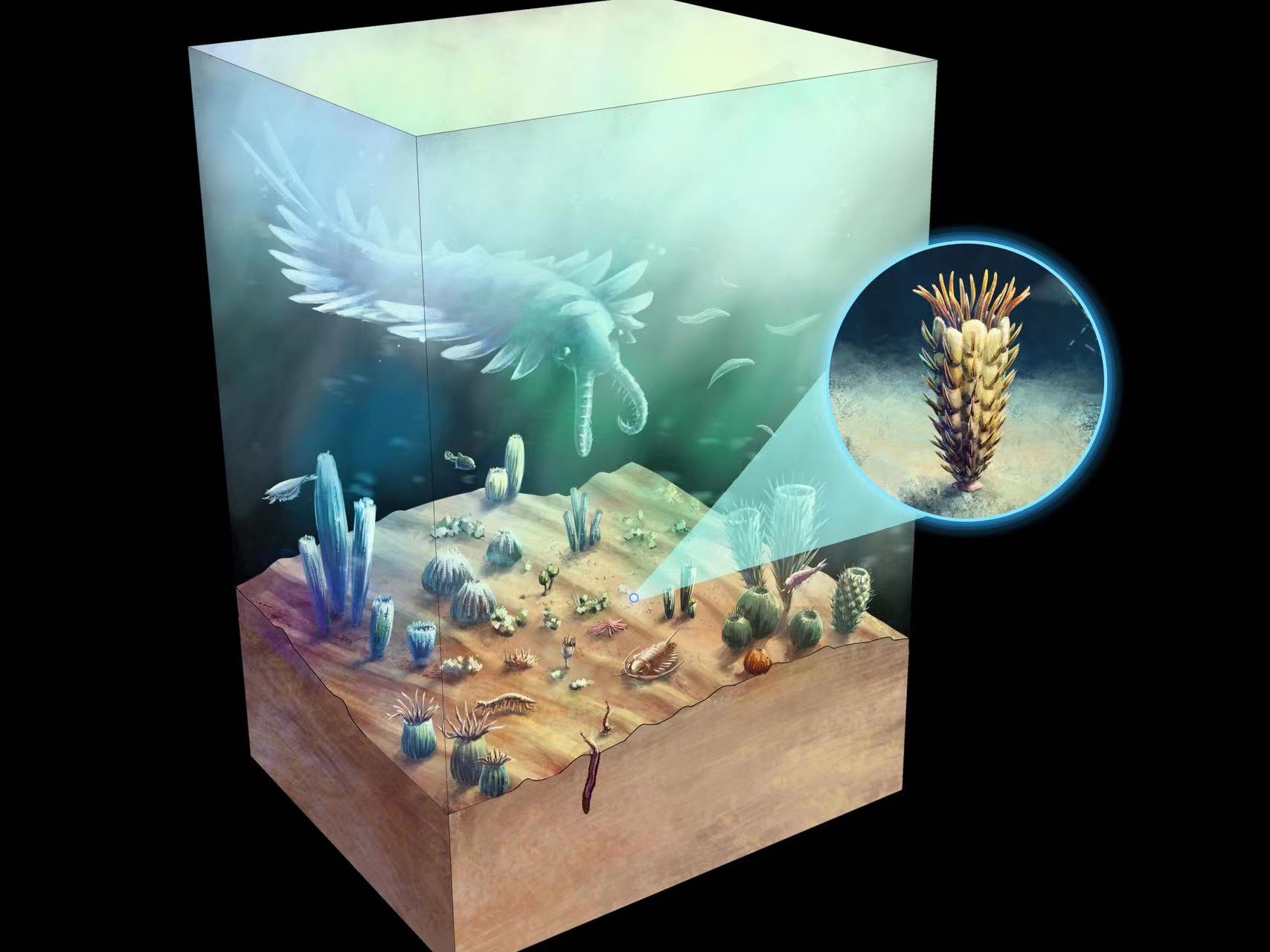 CT三维重建揭示“最早苔藓虫化石”是寒武纪疑难化石“寒武钉”日前,国际地学知名期刊《地质学》(Geology)在线发表了中国科学院南京地质古生物研究所古生物学和油气地层应用重点实验室研究员殷宗军等人的最新研究成果,发现于我国和澳大利亚寒武纪地层中的“最早苔藓虫化石”,应是完整保存骨片系的疑难化石“寒武钉”,而不是苔藓动物或绒枝藻。日前,国际地学知名期刊《地质学》(Geology)在线发表了中国科学院南京地质古生物研究所古生物学和油气地层应用重点实验室研究员殷宗军等人的最新研究成果,发现于我国和澳大利亚寒武纪地层中的“最早苔藓虫化石”,应是完整保存骨片系的疑难化石“寒武钉”,而不是苔藓动物或绒枝藻。寒武纪初期几乎所有动物门类在极短时间内爆发式出现,开启了动物主导“地球—生命系统”的新纪元,这一里程碑式的生命演化事件被称为“寒武纪大爆发”。然而,现今近40个动物门中也有不少类群在寒武纪大爆发期间没有化石记录,主要是微小且缺乏骨骼的类群,因为它们保存为化石的可能性极低。苔藓虫作为多样性高且具有硬化骨骼的动物门类为何也缺席寒武纪大爆发?这一直是未解之谜。2021年,英国《自然》(Nature)杂志报道了“最古老的寒武纪苔藓虫化石”,证据来自陕南镇巴和南澳大利亚寒武纪早期的磷酸盐化微体化石Protomelission gatehousei。作者认为苔藓动物和众多其他动物门类一样,在寒武纪大爆发期间已经出现,这一发现曾引起国内外学界和媒体的广泛关注。然而这一观点很快受到了挑战。2023年,《自然》杂志报道了一类来自云南寒武纪早期小石坝生物群中呈压扁保存的宏体化石,作者认为它们与Protomelission gatehousei是同一类生物,并将它们解释为钙化的绒枝藻(一种绿藻),而不是苔藓动物。相关争论使得苔藓动物门的起源和早期演化历史变得扑朔迷离。那么小石坝生物群中发现的宏体化石和磷酸盐化的微体化石Protomelission究竟是不是同一类生物?Protomelission到底是苔藓动物骨骼还是钙化的绒枝藻?要回答这些问题,解决相关争议,则需要对Protomelission原始标本的CT数据进行三维重构分析。为此,殷宗军带领团队重新分析了《自然》杂志2021年报道的Protomelission化石标本的原始CT数据。通过对原始CT数据进行高精度三维图像重建和精准分割,结果表明Protomelission标本由多列形态相似的骨片拼合而成,单个骨片呈两端向外略微膨大而中间收缩的哑铃状。统计数据显示,骨片从底部到顶部逐渐增大,但保持稳定的长宽比,以保持稳定的形态,这些骨片的三维形态和尺寸与同时代常见的一种离散保存的“寒武钉”(Cambroclavus)骨片非常一致,只不过每一个骨片上的钉刺断掉了而已。骨片在纵向上呈叠瓦状排列,形成单列骨片系;而横向上多个单列骨片系以错开半个骨片的长度交错拼合,最终组合成完整的阵列式骨片系。骨片的这种铰链堆叠方式和前人报道过的一些较为零碎的寒武钉骨片系标本非常一致。更为重要的是,科研人员还在标本中央腔中新发现了一些钉状结构,三维图像数据显示这些钉状结构实际上就是寒武钉骨片带钉刺的部分。以上图像解析数据表明,Protomelission并非苔藓虫,而是保存更为完整的寒武钉骨片系标本。因此,Protomelission与寒武钉是同一类生物,该属名是Cambroclavus的晚出同物异名,应被弃用。同时,研究团队也系统对比了这些标本与宏体化石绒枝藻的三维解剖学特征,发现两者具有显著区别,亲缘关系相距甚远。作为寒武纪早期代表性疑难微体骨片化石之一,寒武钉多以离散骨片形式保存,迄今人们对此类化石的完整样貌和亲缘关系等信息知之甚少。依据新发现的较为完整的骨片系标本,科研人员重建了寒武钉的三维结构,并在此基础上对该生物的原始样貌进行了复原。结果显示,寒武钉是一类已经灭绝的有表皮的后生动物,它整体呈倒锥形的桶装,软组织和器官在中央腔内,全身覆盖带刺骨片起到防御的功能,以底栖固着的方式生活在浅海环境中。由于缺乏软躯体结构的信息,寒武钉究竟属于哪个动物门依然不得而知,但可以肯定的是,现代动物门类中尚无发育有类似寒武钉相同骨片系的类群。这种情况在寒武纪大爆发期间屡见不鲜,因为寒武纪大爆发期间出现了许多像寒武钉一样难以归到现存门类的动物,例如开腔骨、威瓦西虫、古虫等。这表明寒武纪大爆发期间动物躯体构型的分异度非常高。而这一客观存在的事实又使得“苔藓虫为何缺席寒武纪大爆发”之谜更为引人注目。该研究得到科技部国家重点研发计划项目、国家自然科学基金和中国科学院青年创新促进会优秀会员项目的共同资助。相关论文信息:Xiang, K., Yin, Z., Liu, W., Zhao, F., and Zhu, M., 2023, Early Cambrian Cambroclavus is a scleritomous eumetazoan unrelated to bryozoan or dasyclad algae: Geology. https://doi.org/10.1130/g51663.1.Yang, J., Lan, T., Zhang, X. G., and Smith, M. R., 2023, Protomelission is an early dasyclad alga and not a Cambrian bryozoan: Nature, v. 615, no. 7952, p. 468-471. https://doi.org/10.1038/s41586-023-05775-5.Zhang, Z., Zhang, Z., Ma, J., Taylor, P. D., Strotz, L. C., Jacquet, S. M., Skovsted, C. B., Chen, F., Han, J., and Brock, G. A., 2021, Fossil evidence unveils an early Cambrian origin for Bryozoa: Nature, v. 599, no. 7884, p. 251-255. https://doi.org/10.1038/s41586-021-04033-w.标本SADME 10470的CT图像,黄色代表构成标本的骨片。(A-E)CT数据及重建;(F-G)纵截面;(H-J)C中箭头所指的单列骨片叠放在一起;(K-O)拆分开的单个骨片;(P-Q)横截面,红色为骨片重叠部分轮廓;(R)D的局部放大;(S)G的局部放大。标本ELI XYB 4 AN02的CT图像与SEM图像,黄色代表构成标本的骨片,绿色代表标本顶部腔内发现的寒武钉骨片。(A-F)CT数据及重建;(G-K)残破的寒武钉骨片;(L-M)横截面;(N-O)纵截面;(P)侧向SEM图像,引自Zhang et al., 2021。根据CT数据三维重建的寒武钉骨片系。(A-E)单个完整寒武钉骨片重建;(F-J)典型的离散保存的寒武钉骨片化石;(K-O)标本SADME 10470的三维重建;(P-T)标本ELI XYB 4 AN02的三维重建。寒武钉的复原图寒武钉生态场景复原图 (被选为Geology封面)272023-12
 -
 热河生物群一种独特的蚌壳蕨科植物新发现与再认识近期,根据热河生物群新发现的化石标本,中国科学院南京地质古生物研究所研究员王永栋领衔的一个中外研究小组,对夏家街蕨属开展了系统学的研究。基于形态学特征对夏家街蕨属进行分类特征的修订;并从系统发育学角度,讨论了该属种在蚌壳蕨科植物中可能的分类位置。该成果近期发表在国际学术刊物《白垩纪研究》(Cretaceous Research)。蚌壳蕨科真蕨植物是中生代植物群中的重要组成部分,并在侏罗纪中期与白垩纪早期经历了两次繁盛时期,演化出较为丰富的种类。大部分中生代蚌壳蕨科植物化石保留有独特的双瓣状或近似杯状的孢子囊群盖的特征。发现自辽西热河生物群的夏家街蕨属(Xiajiajienia)是蚌壳蕨科中较为独特的一属,由孙革等(2001)基于吉林辽源夏家街以及辽西黄半吉沟产出的化石首次研究描述,根据生殖羽片的特征将其划分至蚌壳蕨科中并建立一新属新种。由于化石材料较为缺乏,近年来,关于夏家街蕨化石鲜有报道,部分营养叶化石标本还被重新研究后归入苏铁目的热河似查米亚属(Rehezamites)。因此,其分类位置存在一定的争议。近期,根据热河生物群新发现的化石标本,中国科学院南京地质古生物研究所研究员王永栋领衔的一个中外研究小组,对夏家街蕨属开展了系统学的研究。基于形态学特征对夏家街蕨属进行分类特征的修订;并从系统发育学角度,讨论了该属种在蚌壳蕨科植物中可能的分类位置。该成果近期发表在国际学术刊物《白垩纪研究》(Cretaceous Research)。新发现的化石标本属于奇异夏家街蕨(Xiajiajienia mirabila),产自辽西北票黄半吉沟的义县组下部尖山沟层(~125.5 Ma)。虽只是一块印痕化石,但却保存了完好的生殖羽片与营养羽片形态,表明该属种属于“部分可育羽片”的类型,即二型叶羽片。营养小羽片呈镰形,边缘呈波浪状,几乎不分裂。生殖小羽片强烈退缩成柄状,孢子囊群着生于边缘、具有“蚌壳蕨式”双瓣状的孢子囊群盖。奇异夏家街蕨的独特之处在于,它拥有蚌壳蕨科植物较为特征的双瓣状孢子囊群盖,但营养羽片却呈镰形且不分裂,这一特征与蚌壳蕨科植物中常呈现出的楔羊齿型的羽片有着明显区别。根据新发现的生殖羽片形态特征,研究团队利用系统发育分析方法,结合现代蕨类植物的分子骨架约束,对奇异夏家街蕨的系统分类位置进行了讨论,并评估了其与蚌壳蕨科、碗蕨科、鳞始蕨科等具有相似孢子囊群形态特征的蕨类植物的关系。结果表明,夏家街蕨属与蚌壳蕨科关系更近,且相较于中生代常见的锥叶蕨属(Coniopteris),与蚌壳蕨属(Dicksonia)的一些化石种关系更近。研究团队还根据前人对热河生物群古气候古环境的研究结果,推测夏家街蕨的生长环境偏好为具有季节性变化的温和气候环境,与某些蚌壳蕨属现生种类似,对区域湿度有一定要求。本研究得到了国家自然科学基金项目、中国科学院先导专项课题、现代古生物学和地层学国家重点实验室开放课题基金、国际地球科学计划IGCP632,655,739项目、国家留学基金委CSC联合资助。论文相关信息:ZHANG, L., WANG, Y., RUHL, M., ZHU, Y. and LI, H. 2023. Re-investigations of the fossil fern Xiajiajienia mirabila (Dicksoniaceae) based on new material from the Lower Cretaceous of western Liaoning, China. Cretaceous Research, 149, 105543. https://doi.org/10.1016/j.cretres.2023.105543.奇异夏家街蕨三种类型的羽片,部分可育羽片(A-B),营养羽片(C),以及完全可育羽片(D),比例尺为1cm;图E、F、G分别为图A、B、C营养小羽片的局部放大,显示其镰形且不分裂的形态,比例尺分别为2mm,2mm,5mm奇异夏家街蕨生殖羽片及孢子囊群形态展示以及与蚌壳蕨属现生种(D.lanata)的形态对比。显示生殖小羽片强烈退缩成柄状,孢子囊群着生于边缘、具有“蚌壳蕨式”双瓣状的孢子囊群盖奇异夏家街蕨营养羽片(A),营养小羽片(B),可育羽片(D),部分可育羽片(E),生殖小羽片、孢子囊及孢子(C)形态展示线图基于分子骨架约束的夏家街属植物及其相关类群的多数原则一致树,显示奇异夏家街蕨与蚌壳蕨属的化石种关系更近262023-12
 -
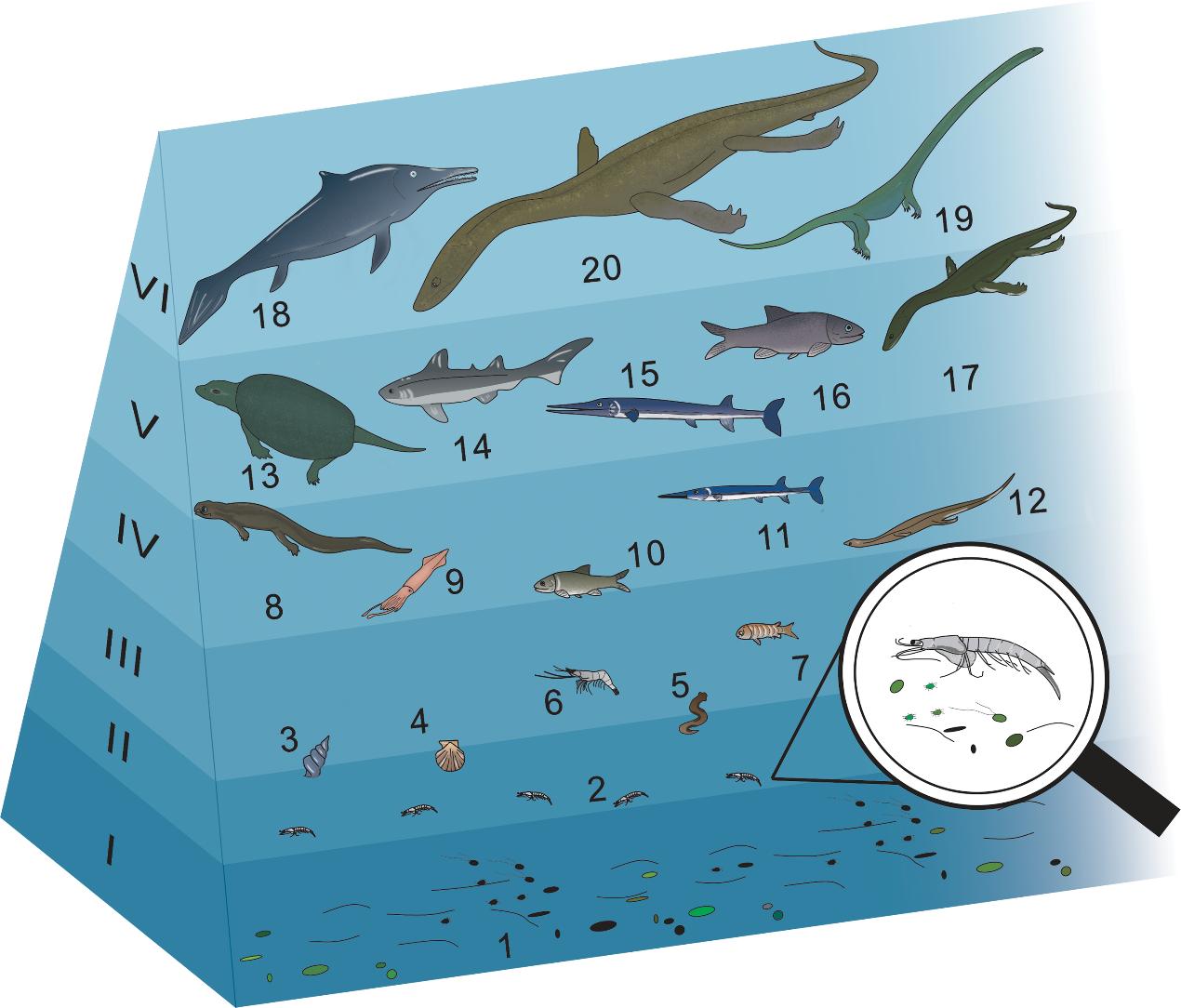 粪化石新材料揭示罗平生物群生态系底层结构组成研究表明,触发中生代海洋生态系统革命的浮游动植物类群(如硅藻,沟鞭藻等)可能是在中生代安尼期之后的某一时段才开始出现并逐渐占据主导。研究已在线发表在国际地学领域专业期刊《古地理,古气候,古生态》(Palaeogeography, Palaeoclimatology, Palaeoecology)。二叠纪-三叠纪之交的大灭绝事件使整个海洋生态系统遭受史无前例的重创,海洋中80%的物种从地球上消失殆尽。崩溃的生态系如何从灭绝的大萧条中逐步复苏,这一科学问题一直是古生物学家和古生态学家关注的焦点。生态系复苏的研究经历了从研究单个属种的多样性变化,到从整个生态系结构的完整度上来衡量复苏的进程及触发机制。现有研究表明,生态系底层的变革,如原始生产者及初级消费者的转变,往往能够对整个生态系产生自下而上的关联性变化,并触发生态系的根本性转变,这尤其以中生代海洋浮游动植物(沟鞭藻,硅藻和颗石藻)的变革进而导致中生代海洋生态系统革命为代表。云南罗平地区中三叠统关岭组中产出的罗平生物群,代表了二叠纪末大灭绝事件后,浅海生态系已完全复苏。该浅海古生态系的建立,也逐步奠定了现代海洋生态系统从雏形到定型的转变。然而,以罗平生物群为代表的浅海生态系,其底层原始生产者及初级消费者的组成特征如何?其结构特征是否是触发罗平生物群古生态系趋于复杂和繁盛的控制因素?这些重要科学问题仍是未解之谜。针对这些科学问题,中国科学院南京地质古生物研究所硕士研究生陈雨萱等人,在罗茂研究员指导下,与成都地质调查中心罗平生物群研究团队、英国布里斯托大学、以及中国科学院海洋研究所的科研人员开展合作研究,在罗平生物群下薄层化石层中发现了一类新的粪化石,为解答这些科学问题,提供了重要线索。相关研究已在线发表在国际地学领域专业期刊《古地理,古气候,古生态》(Palaeogeography, Palaeoclimatology, Palaeoecology)。此次罗平生物群中发现的微体粪化石呈椭球状至短柱状不等,表面光滑,粪化石直径范围在59-247微米。微体粪化石成分为微晶碳酸钙和少量残留有机质,且与疣背糠虾化石伴生。通过CT扫描粪化石内部,发现其具有多对新月形空腔状结构,并伴随有自形黄铁矿晶体。此外,对微体粪化石内部进行连续离子束切割成像中,发现了形态稳定的管状空腔结构,经三维复原,该管状结构形态稳定且直径均一,大小在3-4微米,长度为60微米。这一形态特征与矿化的蓝细菌极为类似。新月形空腔状结构是甲壳动物所产生粪化石的重要识别标志。这一发现限定了此次发现的微体粪化石生产者的搜索范围。此外,本研究还将微体粪化石和与其伴生的疣背糠虾矿化的肠道形态结构及其成分做了详细对比,发现二者在特征上均高度相似。基于以上特征,研究认为此次新发现的微体粪化石为罗平生物群中数量庞大的疣背糠虾这类浮游动物所产生。更为重要的是,粪化石内部保留的管状蓝细菌,很可能表明当时海洋生态系的原始生产者仍为蓝细菌这类比较原始的类群,这与复苏早期,在贵阳生物群中发现的原始生产者相类似。这一结果还表明,触发中生代海洋生态系统革命的浮游动植物类群(如硅藻,沟鞭藻等)可能是在中生代安尼期之后的某一时段才开始出现并逐渐占据主导。该项工作受到国家自然科学基金以及中国科学院人才计划的联合资助。论文相关信息:Chen, Y.X., Luo, Mao., Benton, M.J., Hu, S.X., Zhang, Q.Y., Ji, C., Huang, J.Y., Kou, Q., Zhou, C.Y., Wen, W., 2023. Crustacean microcoprolites from the Middle Triassic Luoping Biota, China: Evidence for primary producers in the first Modern-type marine ecosystems. Palaeogeography, Palaeoclimatology, Palaeoecology, 632, 111840. https://doi.org/10.1016/j.palaeo.2023.111840.罗平生物群中发现的微体粪化石特写罗平生物群中新发现微体粪化石电镜照片及其能谱分析罗平生物群中新发现微体粪化石CT扫描照片显示特征性新月形空腔状构造罗平生物群中新发现微体粪化石离子束切割显示保存完好的管状蓝细菌基于新的粪化石材料恢复的罗平生物群海洋生态系完整结构图,其中蓝细菌和疣背糠虾分别代表了底层原始生产者和初级消费者222023-12
 -
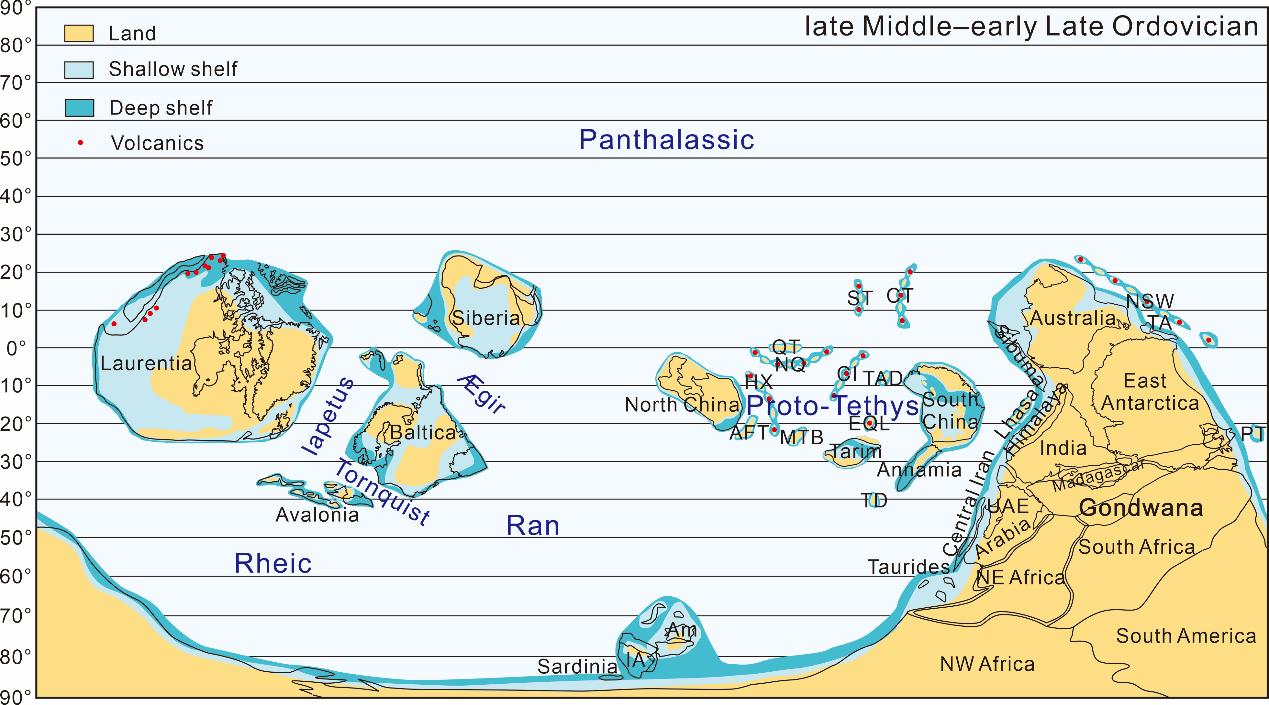 祁连山及邻区晚奥陶世三叶虫与原特提斯多岛洋的古地理重建近期,中国科学院南京地质古生物研究所助理研究员魏鑫与团队成员合作,对祁连山及邻区中奥陶世末期-晚奥陶世(达瑞威尔晚期–凯迪期)的三叶虫动物群进行了梳理和统计。研究结果为祁连山及邻区各地体之间的相对位置、原特提斯多岛洋的古地理重建提供了有价值的生物古地理信息。相关研究已在线发表在国际古生物学研究期刊《古生物学论文》(Papers in Palaeontology)。祁连构造带位于我国三大主要板块(华北、华南和塔里木板块)之间,是中亚构造带的重要组成部分。其主体由七个近平行且呈北西-南东走向的构造单元构成,由北向南分别为阿拉善地区、河西走廊地区、北祁连山地区、祁连地体、南祁连山地区、北柴达木地区(欧龙布鲁克地区)和柴达木地体。它们之间常发育奥陶纪的蛇绿岩带,表明祁连山及邻区当时主要为开阔海或弧后盆地环境,属于原特提斯洋的一部分。这也意味着祁连山及邻区虽然现如今拼贴在一起,但在奥陶纪时它们的位置很可能相距甚远。由于祁连山及邻区研究程度相对较低,导致它们在古地理研究中很少被讨论或图示,有时仅合为一个古地理单元(如柴达木-祁连地区)。古生物证据在研究板块和地体的边界位置,以及相对位置时具有重要的作用,而祁连山及邻区的奥陶纪三叶虫十分丰富,因此,这些数据为原特提斯多岛洋(PTAO,Proto-Tethys Archipelagic Ocean)的古地理重建提供了重要信息。近期,中国科学院南京地质古生物研究所助理研究员魏鑫与团队成员合作,对祁连山及邻区中奥陶世末期-晚奥陶世(达瑞威尔晚期–凯迪期)的三叶虫动物群进行了梳理和统计,并结合同时期全球其它地区的三叶虫数据,对37个地区46个层位的299个三叶虫属/亚属进行聚类分析(CA)和非度量性多元标度变换分析(NMDS)。研究结果为祁连山及邻区各地体之间的相对位置、原特提斯多岛洋的古地理重建提供了有价值的生物古地理信息。相关研究已在线发表在国际古生物学研究期刊《古生物学论文》(Papers in Palaeontology)。研究发现,祁连山及邻区的三叶虫动物群表现出与哈萨克地体群、前科迪勒拉地体、Talesh地区、中天山-北山地区、塔里木板块、华北板块、华南板块以及冈瓦纳低纬度地区的古地理联系,这些区域绝大多数被认为是原特提斯多岛洋的一部分。同时,原特提斯多岛洋的三叶虫动物群在古地理上更接近于冈瓦纳低纬度地区,而与劳伦-波罗的-西伯利亚地区以及冈瓦纳中-高纬度地区的三叶虫动物群联系甚少。基于上述动物群的时空分布规律,小多股虫(Pliomerina)和/或中华赛美虫(Sinocybele)分区被定义为该时期原特提斯多岛洋的三叶虫生物地理区系,这一区系主要受低纬度气候带控制并被高纬度的寒流所影响。例如,华南板块及其邻区(如:Tarim,Annamia,Sibuma,East Qinling,Turkestan-Alai,Talesh)可能受赤道冷舌的影响,形成了一个显著的生物地理亚区。此次研究还首次系统地描述了青海门源(北祁连山地区)扣门子组中部(凯迪阶)的三叶虫动物群。该动物群包括三叶虫5科7属7种(新种Remopleurides zhangi),且显示出与同时期哈萨克地体群(如Chu-Ili地体、Chingiz-Tarbagatai地区以及Karatau-Naryn和North-Tien Shan微板块)、华北板块和劳伦板块之间密切的古地理联系。这一结论也与原特提斯多岛洋的古地理格局相一致。该研究得到中国科学院战略性先导科技专项(B类)、国家自然科学基金项目以及现代古生物学和地层学国家重点实验室的联合资助。论文相关信息:Xin Wei, Xiaocong Luan, Yuchen Zhang, Guanzhou Yan, Renbin Zhan. 2023. Katian (Late Ordovician) trilobites of the North Qilian Mountains and their palaeogeographical implications for the Proto-Tethys Archipelagic Ocean. Papers in Palaeontology, e1532. http://doi.org/10.1002/spp2.1532.CA和NMDS均显示出晚奥陶世PTAO与冈瓦纳大陆低纬度地区密切的古地理联系中奥陶世晚期-晚奥陶世早期原特提斯多岛洋的古地理重建中奥陶世晚期-晚奥陶世早期典型的原特提斯多岛洋三叶虫及其时空分布模式青海门源扣门子组中部(凯迪阶)三叶虫新种Remopleurides zhangi sp. nov.212023-12
 -
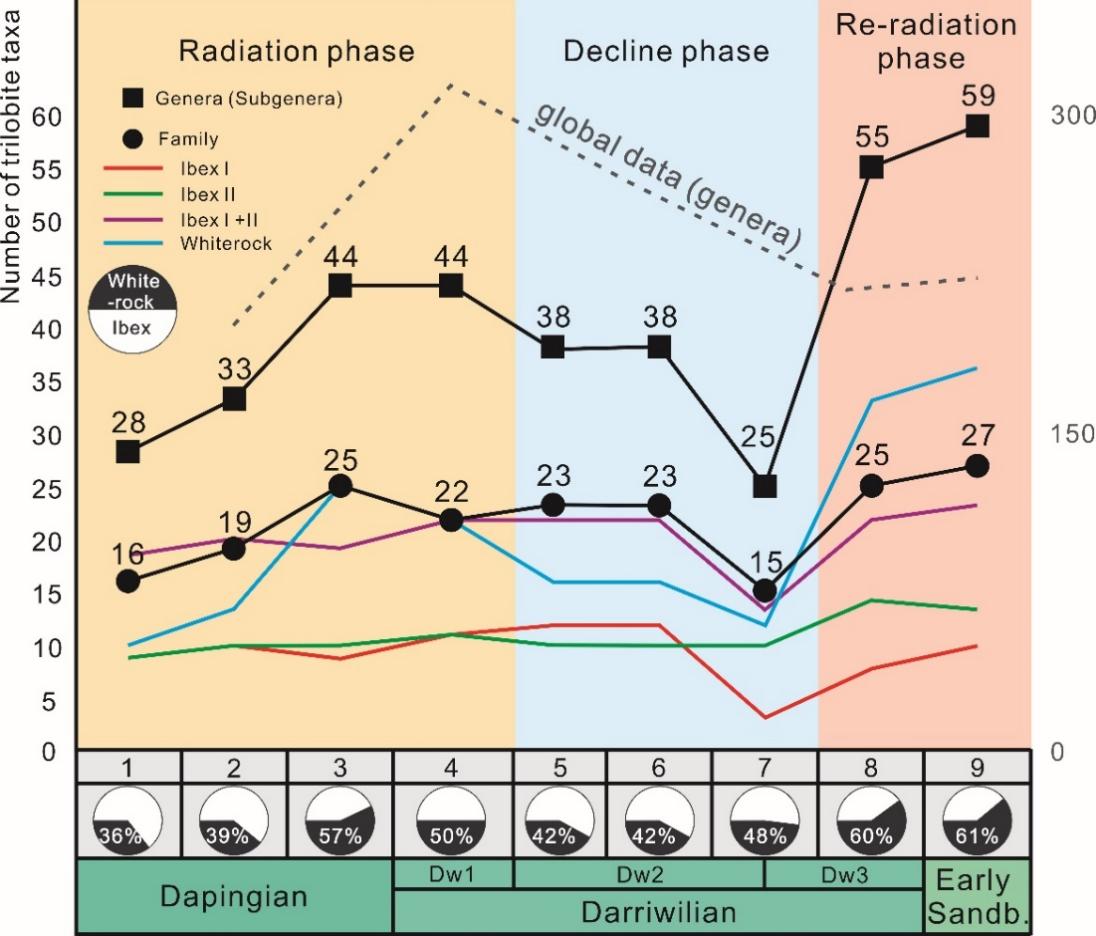 华南板块中奥陶世三叶虫辐射模式及影响因素近期,中国科学院南京地质古生物研究所助理研究员魏鑫等与北京大学地球与空间科学学院、西安地质调查中心的科研人员合作,在高精度生物地层框架下,对华南板块中奥陶世-晚奥陶世早期三叶虫动物群的时空分布规律进行了详细研究。研究通过分析该时期华南板块三叶虫多样性变化和动物群演替的过程,提出了新的辐射模式及其影响因素。奥陶纪生物大辐射是继寒武纪生命大爆发之后又一次海洋生物多样性快速增加事件。三叶虫作为奥陶纪海洋生态系统中主要的生物类群之一,于中奥陶世在全球范围内达到其多样性的峰值。但华南板块的分析显示,其多样性峰值出现在晚奥陶世早期,独特性明显。近期,中国科学院南京地质古生物研究所助理研究员魏鑫等与北京大学地球与空间科学学院、西安地质调查中心的科研人员合作,在高精度生物地层框架下,对华南板块中奥陶世-晚奥陶世早期三叶虫动物群的时空分布规律进行了详细研究。研究通过分析该时期华南板块三叶虫多样性变化和动物群演替的过程,提出了新的辐射模式及其影响因素。相关研究已在线发表在国际地学领域专业期刊《古地理,古气候,古生态》(Palaeogeography, Palaeoclimatology, Palaeoecology)。此次研究统计的最新三叶虫数据和不同分类单元的数量变化结果,揭示了华南板块中奥陶世三叶虫动物群的两次辐射事件,即辐射期(大坪期至达瑞威尔早期)和再辐射期(达瑞威尔末期至桑比早期),两次辐射事件被达瑞威尔中-晚期之初的三叶虫多样性衰落所截断。研究通过Q型聚类分析方法共识别出3个三叶虫类群(即Groups A,B和C),它们分别与华南板块该时期三个宏演化阶段相一致;R型聚类分析则对研究时段进行聚类,揭示了三叶虫动物群的演替过程,且3次动物群演替事件主要以三叶虫生物相的转变为标志,其时间节点和演替过程均与环境变化相耦合。其中,发生在达瑞威尔中-晚期之交的三叶虫动物群演替事件直接引起了早中奥陶世三叶虫动物群向晚奥陶世三叶虫动物群的重大转变,这一事件不仅出现在低纬度地区的华南板块,也出现在中纬度地区的波罗的板块,并以浅水地方分子的大量消亡为特征。白石(Whiterock)三叶虫动物群是古生代演化动物群的重要组成部分,在奥陶纪,白石动物群多样性逐渐增加,并在中晚奥陶世逐步占据各种生态位,被认为是三叶虫在奥陶纪发生辐射的标志。华南板块的白石动物群于中奥陶世大坪晚期-达瑞威尔早期首次在外陆棚环境辐射,随后(达瑞威尔中期)辐射中心迁移至斜坡环境;然而第一次辐射仅仅发生在局部环境中,直到第二次辐射(达瑞威尔末期),白石动物群才在陆棚至斜坡的所有环境中占据优势,逐渐达到辐射顶峰。华南板块中奥陶世三叶虫动物群的两次辐射分别由两次大的海侵事件所触发(大坪晚期-达瑞威尔早期、达瑞威尔晚期-桑比早期),海平面的上升一方面为三叶虫提供了新的生态位,另一方面也加速了不同板块或地体之间动物群的交流。中奥陶世以来,海水氧含量的快速增加也为三叶虫动物群向深水拓展生态位提供了基本条件。此外,全球变凉、底质环境多样化以及区域构造运动也可能促使了三叶虫辐射。该研究得到中国科学院战略性先导科技专项(B类)、国家自然科学基金项目以及现代古生物学和地层学国家重点实验室的联合资助。论文相关信息:Xin Wei, Jianbo Liu, Renbin Zhan, Zhiqiang Zhou, Guanzhou Yan. 2024. Diversity dynamics, faunal turnover and radiation pattern of the Middle Ordovician trilobites in South China. Palaeogeography, Palaeoclimatology, Palaeoecology, 633, 111905. https://doi.org/10.1016/j.palaeo.2023.111905.华南板块中奥陶世-晚奥陶世早期三叶虫宏演化阶段划分暨不同分类单元数量的变化基于Q和R型聚类分析的三叶虫(属)时段分布热图,显示出华南板块中奥陶世-晚奥陶世早期(TS1-9)的三叶虫类群和动物群演替华南板块中奥陶世-晚奥陶世早期三叶虫生物相和岩相沿水深梯度的分布华南板块中奥陶世-晚奥陶世早期三叶虫(属)多样性曲线和相关环境变化202023-12
 -
 科学家发现已知最古老的蚊子——雄性蚊子曾经也是吸血的12月4日,国际知名期刊《当代生物学》(Current Biology)在线发表了由中国科学院南京地质古生物研究所黎巴嫩籍研究员丹尼·阿扎(Dany Azar)领衔的一项最新研究成果——在距今约1.3亿年前的黎巴嫩琥珀中发现了已知最古老的蚊子化石。这项新发现还证明了在蚊科演化的早期阶段,雄性的蚊子也是吸血的,并揭示昆虫的早期吸血行为比我们想象的更为复杂。12月4日,国际知名期刊《当代生物学》(Current Biology)在线发表了由中国科学院南京地质古生物研究所黎巴嫩籍研究员丹尼 阿扎(Dany Azar)领衔的一项最新研究成果——在距今约1.3亿年前的黎巴嫩琥珀中发现了已知最古老的蚊子化石。这项新发现还证明了在蚊科演化的早期阶段,雄性的蚊子也是吸血的,并揭示昆虫的早期吸血行为比我们想象的更为复杂。蚊子是一种臭名昭著的吸血昆虫,它们吸食人类或动物的血液,并传播疾病。昆虫的吸血行为被认为是从用来取食植物汁液的刺吸式口器转变而来的。例如,吸血跳蚤很可能起源于以花蜜为食的昆虫。但吸血行为的演化过程一直很难研究,部分原因是昆虫化石记录的空白。现今的蚊科具有超过3000种不同类型的蚊子,但人类对它们的起源和早期演化的了解却极为有限。早白垩世的黎巴嫩琥珀保存了已知最古老的琥珀生物群。丹尼 阿扎经过多年艰苦的野外工作,发现并采集了近500处黎巴嫩琥珀产地。此次研究成果来自于其中2块保存了精美蚊子的琥珀。研究人员通过南京古生物所的激光共聚焦显微镜、荧光显微镜等先进科学仪器的仔细观察,发现这两只雄蚊均保存了特有的刺吸式口器:包括呈尖锐三角形的下颚及延长的具有小齿的构造等。现今雌蚊具有刺吸式口器用于吸血,而雄蚊口器退化则多吸食花露。根据此次发现的雄蚊刺吸式口器,研究推测在1.3亿年前雄蚊也是吸血昆虫。虽然分子生物学证据暗示蚊科起源于更古老的侏罗纪,但过去关于蚊科最早的化石记录来自于距今约1亿年前的白垩纪中期。此次发现的琥珀化石中的两只雄性蚊子距今约1.3亿年,将蚊子的化石记录提前了近3000万年。该研究由丹尼 阿扎领衔,法国自然博物馆教授A. Nel,南京古生物所研究员黄迪颖,以及美国自然历史博物馆教授M. Engel等合作完成。研究得到国家自然科学基金委资助。论文相关信息:Dany Azar, Andre Nel, Diying Huang, Michael S. Engel, The earliest fossil mosquito, Current Biology (2023), https://doi.org/10.1016/j.cub.2023.10.047.琥珀中雄蚊背面视图琥珀中雄蚊口器细节图,比例尺:10 m早白垩世黎巴嫩琥珀蚊子化石的生态复原图042023-12
 -
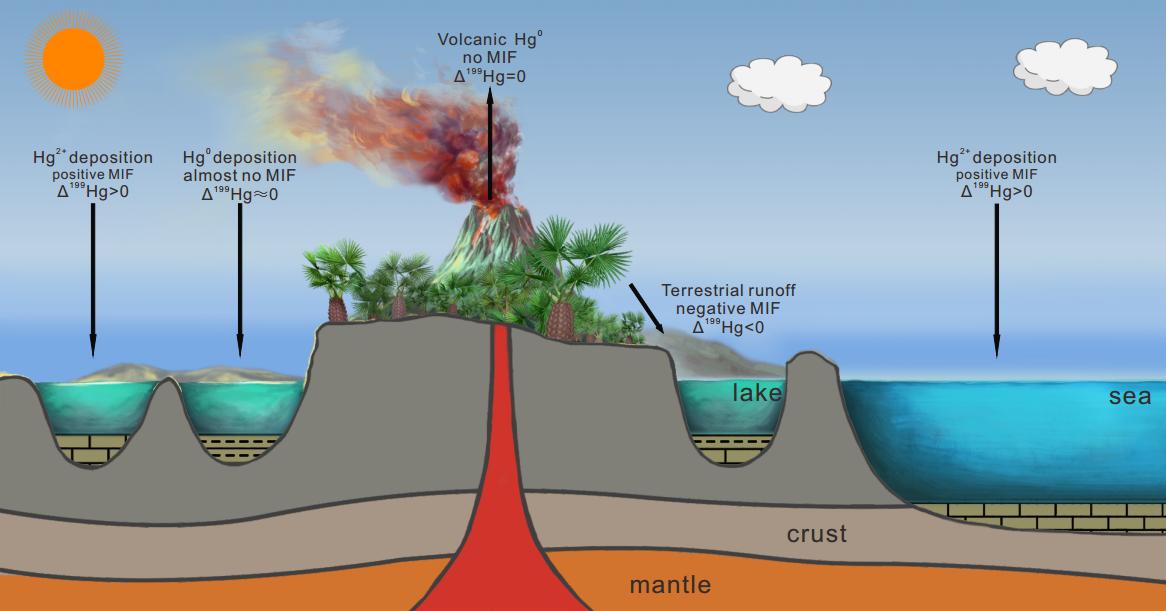 白垩纪/古近纪界线海洋和陆地汞记录与德干火山活动研究发现德干玄武岩喷发导致K/Pg界线之前或界线处的汞值呈对数正态分布,与显生宙其他大灭绝事件界线处的汞数据具有相似的趋势。相关研究成果发布在地球科学综合性期刊《地球科学评论》(Earth-Science Reviews)。约6600万年前的白垩纪末生物大灭绝从根本上重塑了地球的生态系统,结束了超过1.5亿年的恐龙时代,并为哺乳动物的崛起铺平了道路。目前,该大灭绝的原因仍处于激烈争论当中,印度徳干玄武岩喷发和小行星撞击是两个主流观点。其中,德干玄武岩喷发对全球古环境、古气候的影响是当前学界研究热点之一。近日,中国科学院南京地质古生物研究所副研究员李莎带领研究团队与中国地质大学(北京)教授万晓樵等合作,对白垩纪/古近纪(K/Pg)界线附近的海相和陆相地层中的汞记录进行了综合对比。研究人员整合了分布于全球各地26个关键剖面和钻孔资料,发现德干玄武岩喷发导致K/Pg界线之前或界线处的汞值呈对数正态分布,与显生宙其他大灭绝事件界线处的汞数据具有相似的趋势。相关研究成果发布在地球科学综合性期刊《地球科学评论》(Earth-Science Reviews)。由于汞同位素可以为追踪汞源提供有效信息,研究人员在胶莱盆地(中国)、松辽盆地(中国)、Meghalaya(德干高原地区)、StevnsKlint(丹麦)和Bottaccione(意大利)剖面和钻孔中,发现奇数汞同位素的非质量分馏信号(Hg-MIF)接近于0,认为其与火山活动从地幔带来的汞有关;在平邑盆地(中国)、Bidart(法国)、Padriciano(意大利)和Bajada del Jag el(阿根廷)的剖面和钻孔中,Hg-MIF偏正,主要代表二价汞沉积,与二价汞的光致还原过程有关;而在Jhilmili(德干高原地区)剖面,Hg-MIF偏负,推测与陆源输入有关。研究结果发现,全球分布的剖面/钻孔的汞记录与徳干火山活动的前两幕相对应:包括第一幕德干玄武岩喷发事件,时间约为66.3至66.15Ma;第二幕德干玄武岩喷发事件,时间约为66.1至66.0 Ma。其中,白垩纪末期变暖事件(LMWE)与第一幕德干玄武岩喷发事件相关,变暖事件对气候变化和生物危机具有全球影响,例如K/Pg界线之前海洋有孔虫的部分灭绝。然而,德干火山活动第三幕(约65.9至65.8Ma)和第四幕(约65.6至65.5 Ma)的汞记录尚未发现。白垩纪末期大灭绝是一场复杂的灾难事件,是由德干火山活动引起的重大气候波动和海洋酸化开始的,并且可能因希克苏鲁伯小行星撞击的影响而加剧。研究结果为我们了解气候变化与生物演化的关系提供了新的证据,也为理解当今全球气候变化对海洋和湖泊环境和生物群的影响提供了参考。此项研究获得了国家自然科学基金委和中国科学院青年创新促进会的资助。论文相关信息:Li, S.*, Grasby, S.E., Xing, Y., Jarzembowski, E.A., Wang, Q., Zhang, H., Wan, X. and Wang, B., 2023. Mercury contents and isotope ratios in marine and terrestrial archives across the Cretaceous/Paleocene boundary. Earth-Science Reviews: 104635. https://doi.org/10.1016/j.earscirev.2023.104635.汞示踪徳干大火成岩省的全球记录徳干玄武岩喷发事件在全球26个海相、陆相地层中记录的汞值(1417个汞数据)呈正态分布的趋势、汞值和部分剖面汞同位素值的范围德干玄武岩喷发汞同位素变化模式图(杨定华绘制)徳干玄武岩喷发事件在全球海相、陆相地层中的汞记录对比302023-11